

Sometime in 2026 you may find yourself in the most soul-crushing of all acquaintance conversations. These begin innocently enough: one of the bridesmaids at an out-of-town wedding asks how your trip in was, and you reply that it went smoothly, apart from a long line at security. Her date leans over, a concerned look on his face: don’t you have pre-check?
You shift your weight uneasily, balancing a plastic plate of miniature crab cakes in your left hand while sipping the groom’s signature drink (an old-fashioned made with maple syrup) with your right. Before you can respond, another guest (or perhaps some sort of paid crisis actor) chimes in, gleefully: “or at least Clear? My credit card pays for it!”
The floodgates have opened. Global Entry. Hotel Credits. Is there a referral bonus? Do you get a lot of…points? By the time a tray of bacon-wrapped dates passes, someone’s talking about their recent experience with using the Amex concierge to plan their Japan trip, and you’ve begun to dissociate.
Know Thine Enemy
A lot happened in the world of fancy credit cards in 2025, so I hope to arm you with knowledge before your next Credit Card Conversation. To catch you up,
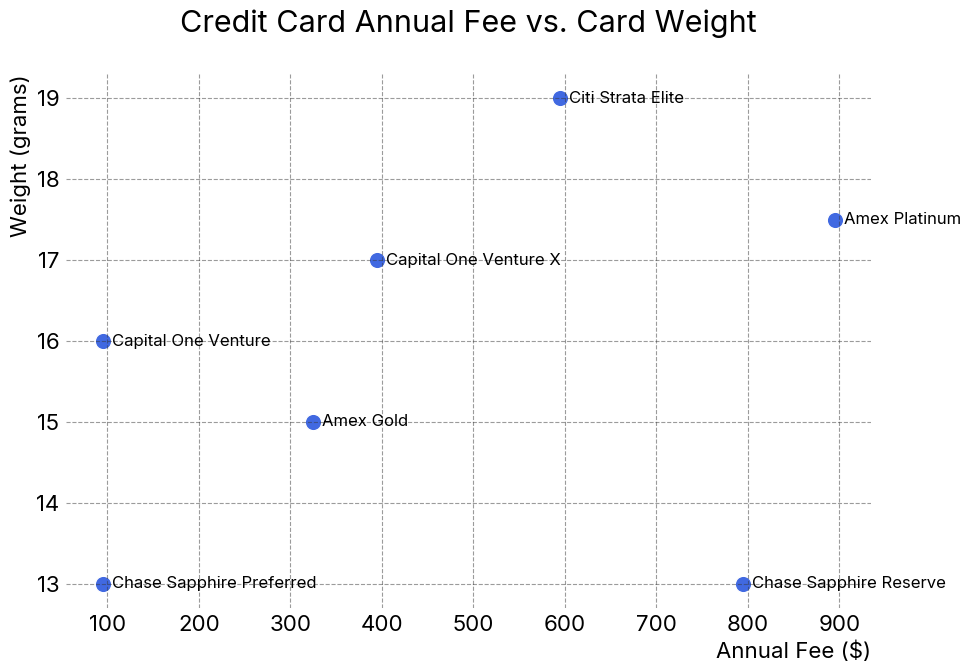
Chase increased the Sapphire Reserve’s annual fee from $550 to $795 in June, briefly making it the most expensive card in the mass-prestige credit card market. In doing so, they added a bunch of stuff to the rewards bundle (a hotel credit, dining credit, Stubhub, etc.)
Amex (the market leader) soon followed with bundle additions and a price raise of their own for their flagship Platinum card, raising its annual fee from $695 to $895 in September. One wonders how much advance notice the companies get for their competitors’ price increases; it’s a lot of work to figure out the partnerships on these cards!
Citi launched the Strata Elite card at $595 (reentering the premium travel card market), and Capital One kept its Venture X card priced at $395.
This leaves us with the following market map, showing the most important dimensions to consider when planning your finances: the card’s annual fee, and how much it weighs1.
Beyond these factors, there are some ancillary considerations like what the card’s benefits are; these will allow you to contribute to the conversation at the welcome drinks. These benefits include—crucially—which airport lounges you’re granted access to.
The first time I stepped into an airport lounge, I regret to admit that I felt a thrill.
My friend Sam and I had a few hours’ layover in Miami on our way to Peru, and his boss had told him to expense passes to the Amex lounge. I felt a spring in my step as we strolled through the terminal. I had made it! The vast economic power of my network commanded an entire special section of the airport, where I would be lavished with free drinks and local delicacies while connecting with other masters of the universe. It was my own little Davos before the flight.
As it turned out, we were too late for the buffet, and we had just half an hour as debutants in an empty lounge to celebrate our newly acquired social status. We bellied up to the bar and reveled in the free Coronas before our red-eye to Lima, arriving groggy and rumpled the next morning.
Airport lounge access has had a similarly seductive effect on a lot of other people, it turns out, and lounges have been a key acquisition driver in the increasingly competitive premium credit card market. Amex opened its first Centurion lounge in Las Vegas in 2013, and after the pandemic left a chunk of Americans flush with excess savings and desperate to travel, Capital One and Chase Sapphire began rolling out their own signature lounges.
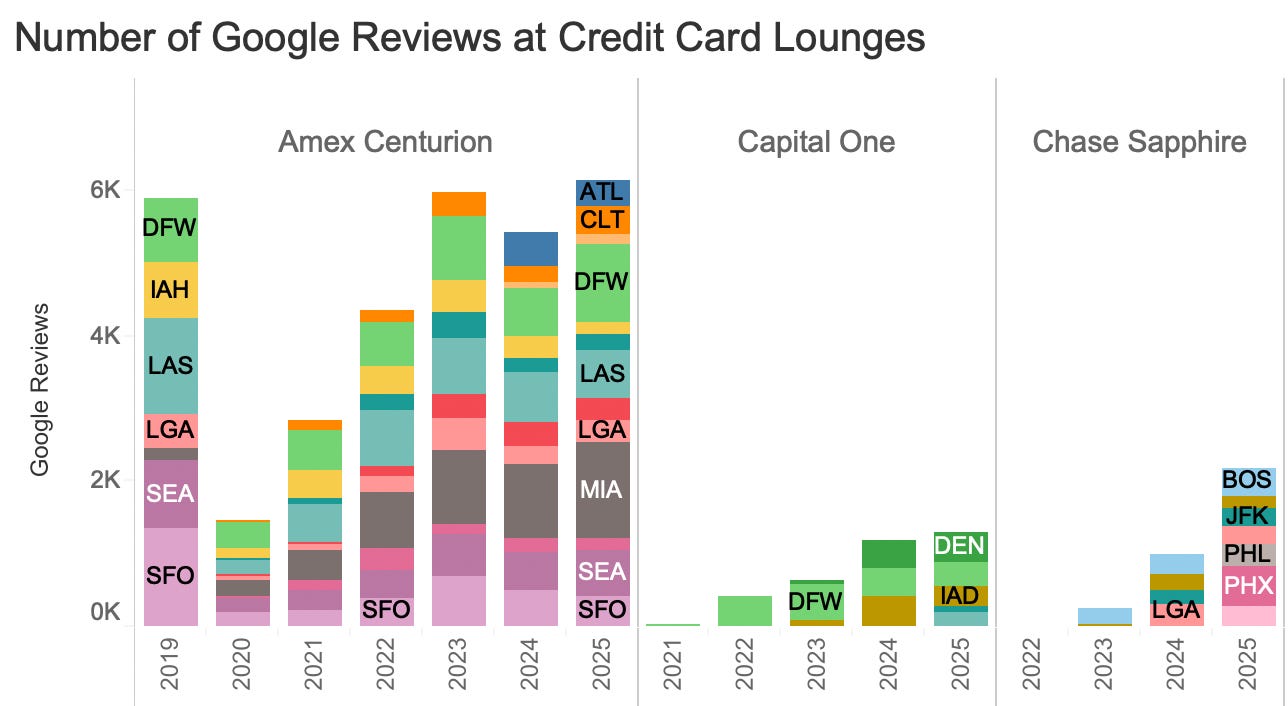
Managing these spaces has been a bit turbulent, as you might expect. As more people sign up for premium credit cards and the number of travelers with access to the lounges has swelled, crowds have become common. Many lounges now require reservations or restrict the number of guests the cardholder can bring; in 2025 more than 10% of Google Reviews at Capital One lounges mentioned a waitlist:
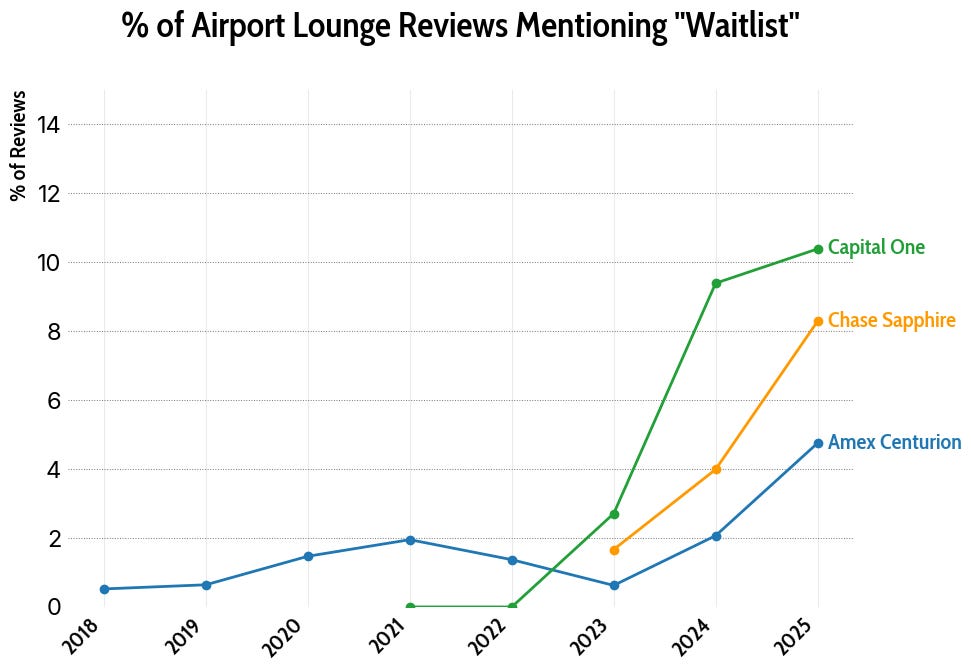
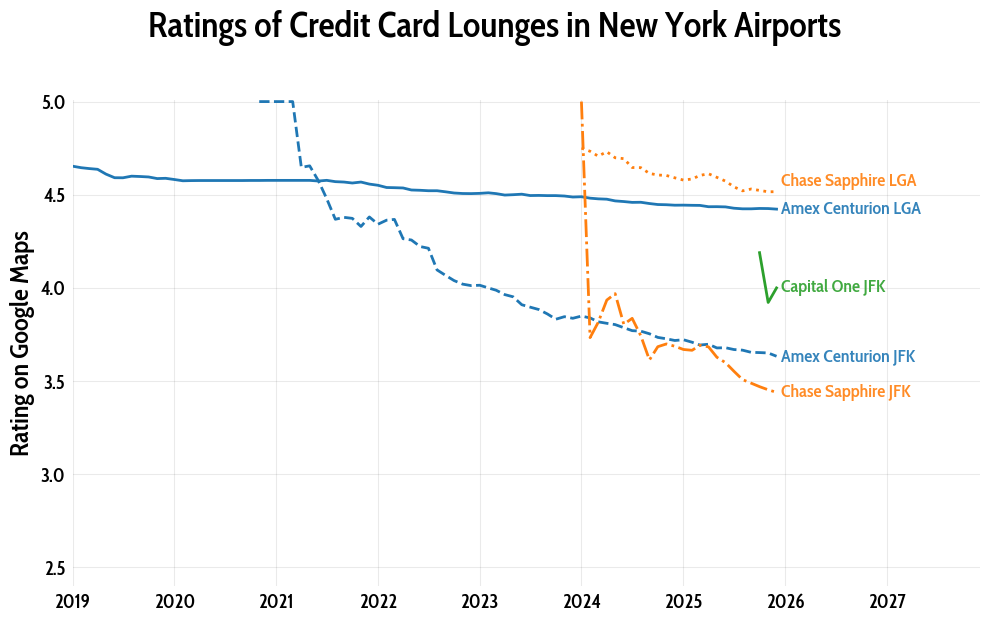
This has led to frustrated customers who are expecting a luxurious experience from their luxurious credit card. In New York, for example, the average rating of lounges has declined substantially, particularly at space-constrained JFK:
This rather dramatic review of the JFK Centurion Lounge captures the dissonance between customer expectations and experience:

New York is not the worst of it; If anyone has recently visited the Chase Sapphire lounge in Phoenix2, where more than 50% of of reviews are 1 star, please comment and let us know what it was like!
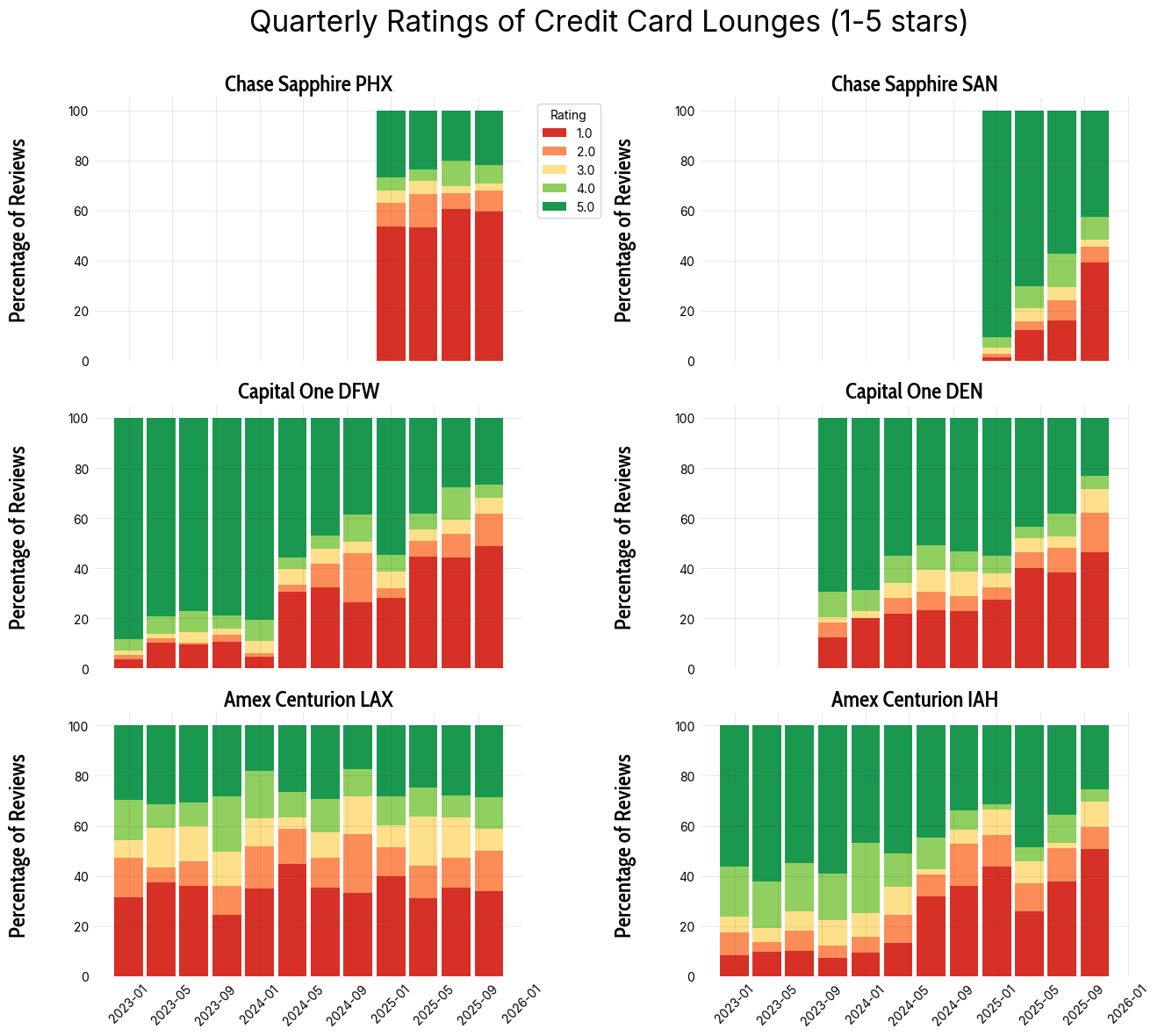
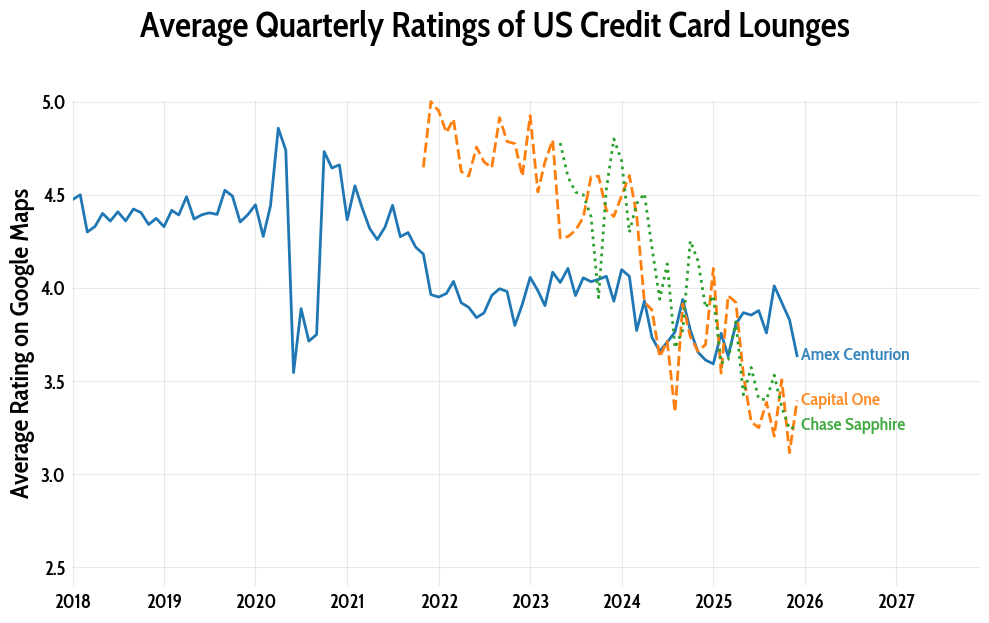
Overall, Amex lounges have weathered the past couple years with slightly higher ratings (I imagine they’ve learned a lot about lounge operations since 2013). Chase and Capital One have struggled since 2024, with their average rating plunging below 3.5, largely driven by high wait times:
The perspective of the credit card companies
I liked this quote from the Chief Strategy Officer at American Airlines: “We are participating in the lounge competition—the arms race in lounges.” From the standpoint of the credit card companies, “arms race” seems like an appropriate term. Their predicament reminds me of this Warren Buffett anecdote:
Warren Buffett owned a department store in the late 1960s. When the department store across the street put an escalator in, he had to, too. In the end, neither benefited from that expensive project. No durable margin improvement or cost improvement, and both were in the same exact spot.
Recounted by Michael Burry in this excellent “google doc debate” about AI progress
Lounges worked great for Amex for the 10 years when they were the only credit card company building them, but as more competitors enter the fray, the competition erodes the benefit to the companies. After the land grab to upsell people to premium cards ends, the companies will be left pouring cash into cumbersome lounges which eat into the margin on the yearly fees.
There’s obviously still a shortage of airport lounge space today based on the amount of people who endure waitlists to use them, so I’ll be curious to see if this pithy Nassim Taleb quote plays out:

It seems likely that in a year or two, after credit card companies, airlines, and airports have added more lounge supply, more and more customers will have noticed just how good Claude has gotten at the email jobs that let them afford an $800 credit card.3 I expect this will lead to less travel and much shorter waitlists at the lounges.
The Best Airport Lounge Bartender
Today I’m about the age that Sam’s boss was when he bought us those passes, and I’ve realized that liminal spaces sponsored by financial institutions are not particularly cool. But I find it heartwarming to see examples of specific employees that customers love,4 and I think airport lounge bartender is an inherently interesting job. So, I looked at the lounges with the highest percentage of reviews mentioning the bartender:
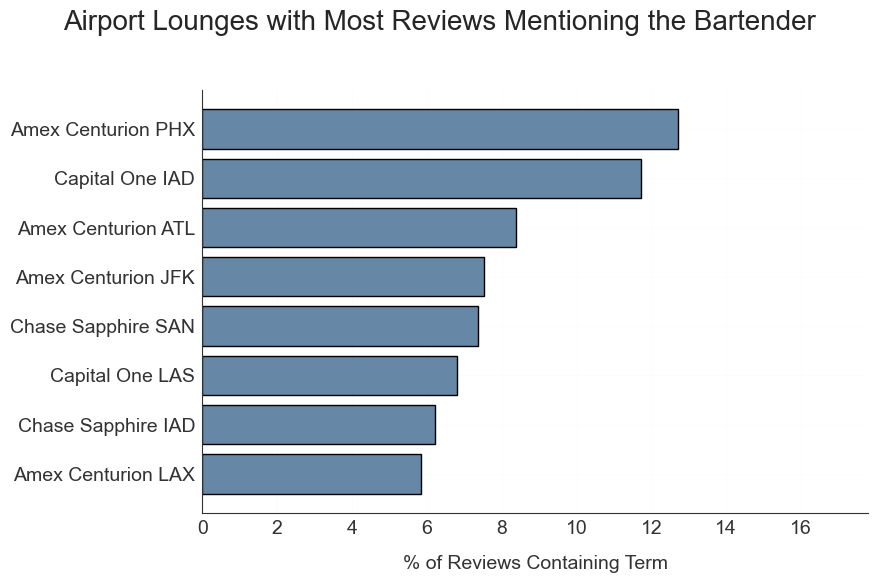
Upon further research, it seems like the Phoenix Amex Centurion has an exceptionally good bartending staff, particularly Mehdi, who sounds like he rocks:
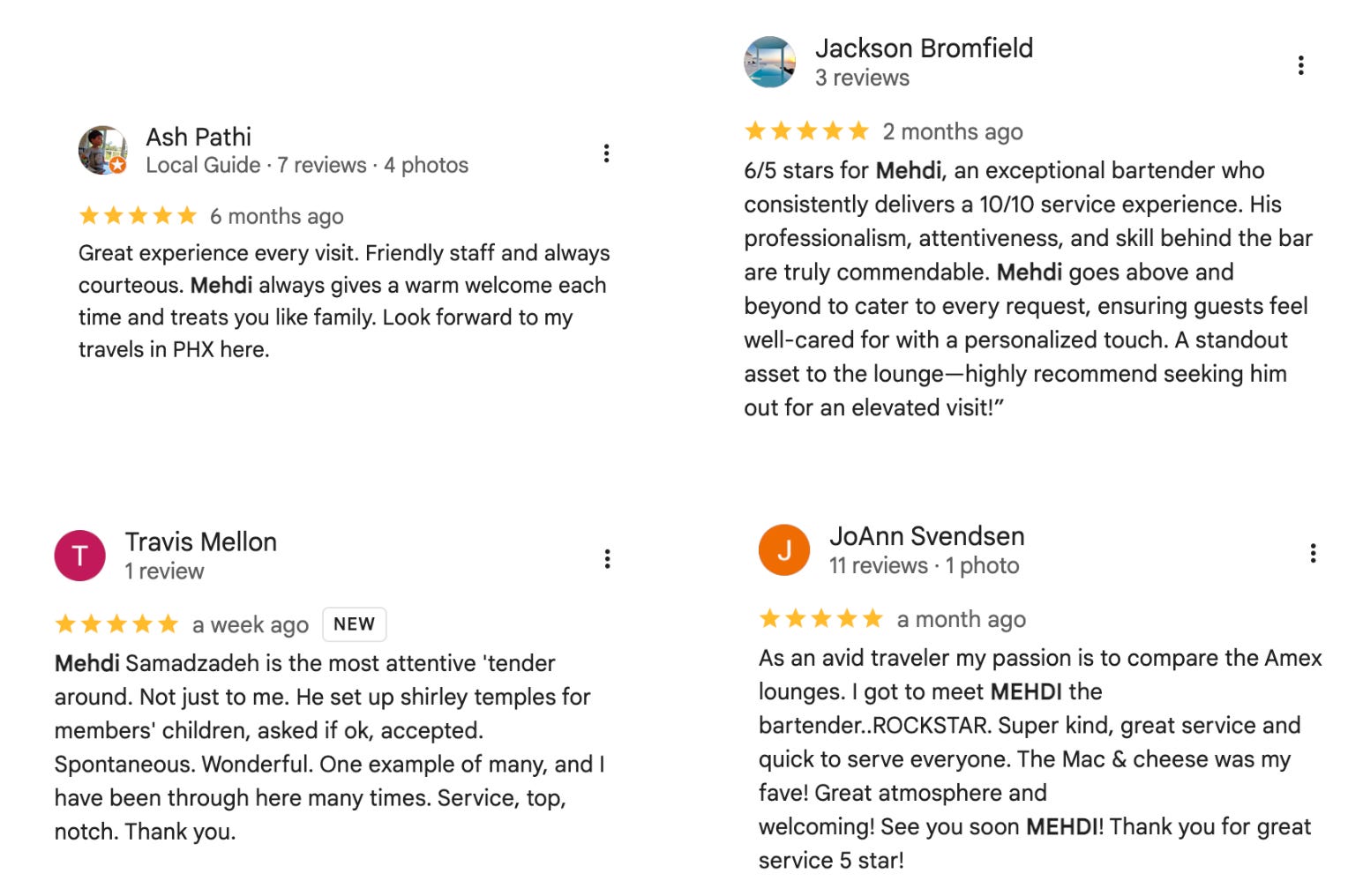
So, if you find yourself in the unenviable position of discussing credit card benefits with acquaintances this year, you can heave a sigh and say that it’s so hard to get into lounges these days that it’s barely worth it, but when you’re flying through Arizona you’ll go to the trouble to have a cocktail at the Centurion. And if you’ve got an intern who is flying through Phoenix soon, tell them to expense the lounge and visit Mehdi at the bar.
Thanks for reading!
A few months after writing about it, I’m in the middle of the rare book that may in fact change my life. Getting Things Done is one of the books that Palantir gives to its new hires, so it has a sense of the dark arts. It’s a productivity book by an extremely ‘90s-looking business guy, and it is both highly literal (he talks about filing cabinets a lot) and charmingly philosophical (“what, actually, is ‘knowledge work?’')

The book’s thesis is that by keeping tasks undocumented, you have “open loops” in your mind which are stressful, and that by documenting each task and the next action needed to move it forward, you can be productive in a way that feels much smoother. I have never had a clean to-do list system and have found using the system the book proposes to make me feel much more in control. I recommend it!
I also just played in an organized poker tournament for the first time and it was so fun and made me want to play more. If you’re in nyc and wanna play poker let me know!
Thank you to the good people at upgradedpoints.com and uscreditcardguide.com for doing the heavy lifting on card weight here. I wish you a lifetime of hefty affiliate commissions.
The Phoenix Chase Sapphire lounge features an Airstream trailer converted into a bar. It seems like this whimsical detail is less charming when you realize there’s a 2 hour wait to access it.
I wrote this article about LLM use a month ago and it already feels dated due to the amount of non-software engineers I know who have been swept up in the fervor around Claude Code. It is a really remarkable product.
I noticed this when I wrote about Blank Street Coffee, and was thrilled when one of the celebrity baristas commented!
Yet another Joe banger
So fun!! More!!